
Cafeland - Restaurant Cooking
GAMEGOSSimulation
4.630.00K Reviews
- Version
- 2.79.3
- Installs
- 10.00M
- Age Rating
- Everyone
Screenshots




Our Review of Cafeland - Restaurant Cooking
 Analysis by Appyee
Have you ever dreamt of running your own restaurant? Well, Cafeland - Restaurant Cooking is here to turn that dream into a reality, all from the comfort of your smartphone. I’ve spent hours diving into this culinary adventure, and let me tell you, it’s as deliciously addictive as it sounds.
A quick session or a longer shift?
I find this game works best when I treat it as a small routine rather than a task that needs constant attention. A quick visit can be enough to check on cooking, serve what is ready, and make one modest improvement to the café. When I have more time, I can stay longer and think about how the kitchen and dining area should develop together. That flexibility is useful for people who want a light simulation between other things, though it won’t satisfy someone looking for a tightly scripted story or a fast action game.
A realistic moment for it is a short break at home: I open the game, check which dishes are prepared, serve customers, then decide whether to spend my next bit of progress on the menu or the room. The satisfying part is seeing those choices add up over repeated visits. The trade-off is that restaurant growth is gradual, so a player who expects to unlock everything in one sitting may find the pace slow. I’d approach it as a casual project, not a race.
How the restaurant loop compares
Compared with many cooking games that focus on tapping quickly through timed orders, Cafeland puts more weight on the ongoing rhythm of preparing dishes, serving visitors, and shaping a place of your own. It has more of a café-management feel than a sequence of isolated kitchen levels. That makes it a better fit if you enjoy watching a business develop over time, while a level-based cooking game may be a better choice if you want short rounds with a clear finish and a more immediate test of speed.
The decorating layer also changes how I think about progress. Instead of treating every reward as a number to collect, I can use it to make the restaurant feel more personal. My practical advice is to avoid changing everything at once: pick a small area or a visual direction, then build around it. That makes decisions easier and helps keep the space coherent, especially when new décor becomes available. The game’s appeal is partly in that steady combination of running a kitchen and making the room feel like yours.
Small choices that make play smoother
Planning around preparation times is more useful than simply choosing whichever dish looks appealing. When I expect to be away from the game for a while, I favor a cooking plan that suits that gap; when I know I can check back sooner, I can pay closer attention to what is ready. This is a simple habit, but it makes the restaurant feel less like a queue of unfinished tasks and more like a business I’m managing at my own pace.
I also recommend separating “progress” from “personal style” in your decisions. If I’m focused on moving forward, I prioritize the parts of the café that help me continue serving and expanding. If I’m playing mainly to unwind, I spend more time on décor and layout. Trying to optimize both at once can make a relaxed game feel like a chore. The useful trade-off is that the same session can serve either goal, but it helps to know which one matters to you that day.
Who will enjoy it, and who may not
This is a good match for players who like a gentle management loop, enjoy customizing a restaurant, and don’t mind returning over time to see gradual progress. It can also suit someone new to simulation games because the opening steps introduce the basic routine without demanding specialist knowledge. I’d be less likely to recommend it to someone who dislikes timers, prefers a complete experience that doesn’t encourage ongoing check-ins, or wants every play session to end with a firm level-completion screen.
There is also a difference between liking the idea of a restaurant and liking the day-to-day loop. If you mostly want to design interiors, the cooking and service cycle may feel like an interruption. If you mainly want a demanding business simulator, the cheerful café presentation and casual pace may feel too soft. I’d try it with those expectations in mind: its strongest appeal comes from mixing light management with personal decoration, not from deep financial modeling or high-pressure kitchen action.
Cooking Up a Storm
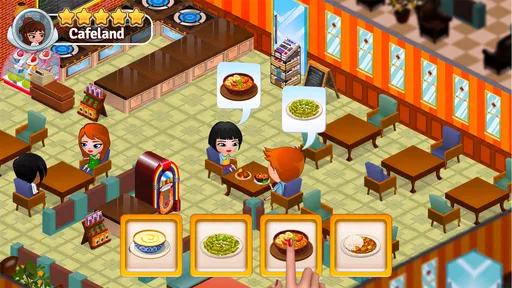
The first thing that grabbed my attention was how easy it is to get started. You don’t need to be a culinary genius to play; the game gently guides you through the basics of setting up your kitchen, managing your menu, and serving your first customers. It’s incredibly intuitive, which means you can jump right in without feeling overwhelmed.
The core of Cafeland is all about cooking and serving dishes. There’s a huge variety of recipes to unlock and master, from juicy burgers to exquisite sushi. Each dish has its own preparation time, so planning is key. It’s a satisfying challenge to keep everything running smoothly, especially when your restaurant starts bustling with customers.
Designing Your Dream Café
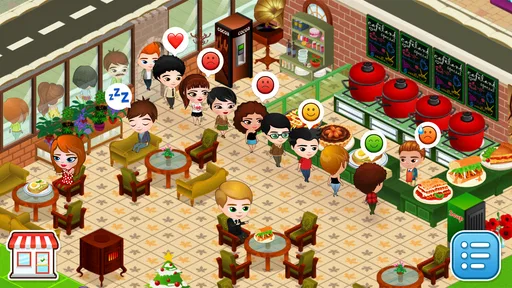
One of the standout features is the customization aspect. You can design and decorate your café to reflect your personal style. Whether you want a cozy little bistro or a chic modern eatery, the options are endless. I had a blast experimenting with different furniture and layouts, creating a space that felt uniquely mine.
Decorating isn’t just for aesthetics; it also affects your restaurant’s appeal. The more inviting your café looks, the more customers you attract. It’s a clever way to keep things interesting and rewarding.
Building a Culinary Empire
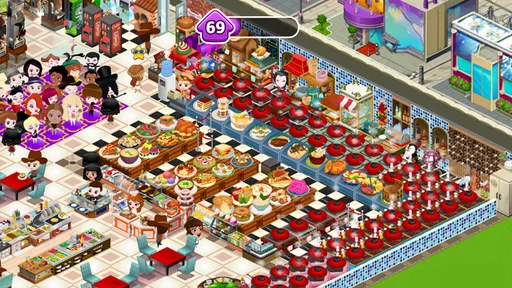
As you progress, you’ll find yourself expanding your restaurant, hiring staff, and even hosting parties. It’s all about growth and strategy. The game does an excellent job of balancing these elements, so you’re constantly engaged without feeling swamped.
I particularly enjoyed the social aspect of hosting parties. Inviting other players to your events adds a fun, community-driven layer to the game. Plus, it’s a great way to earn extra bonuses and items.
Unlocking New Horizons
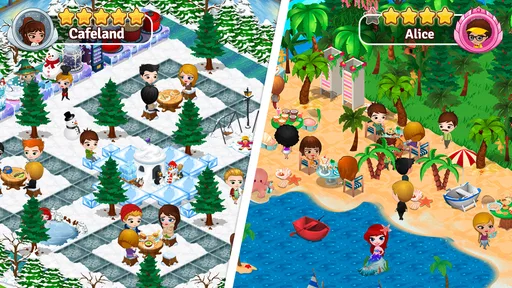
What keeps Cafeland fresh is its frequent updates and seasonal events. There’s always something new to explore, whether it’s a holiday-themed challenge or a new set of recipes to try. These updates keep players coming back, eager to see what’s next on the menu.
The game’s developers have done a fantastic job of listening to player feedback and making improvements, which is always a good sign. It shows they care about the player experience and are committed to keeping the game alive and thriving.
Readability, navigation, and comfort
The game’s guided opening makes the basic sequence approachable: set up the kitchen, choose dishes, and serve customers. I found that useful because it gives new players a clear first action instead of dropping them into an unexplained management screen. Once the café gets busier, though, there is more to keep track of. If you prefer a very sparse interface with only one objective at a time, the growing collection of activities and choices may take a little getting used to.
For comfortable play, I’d make decisions in small batches rather than trying to redesign the whole café while also managing the kitchen. I first handle the immediate restaurant routine, then move to decoration or longer-term expansion. That order keeps the main loop understandable and reduces the feeling of bouncing between unrelated tasks. It is a practical way to make the game easier to follow, particularly during a short session.
Different abilities and play situations
Because this is a simulation built around planning and repeated interactions rather than reflex-heavy action, it may be more comfortable for players who prefer to think through choices at their own pace. However, cooking timers and a lively restaurant can still create moments where several things seem to need attention. Players who find visual activity or frequent task switching tiring may prefer brief visits and a single goal per session rather than trying to keep every part of the café moving at once.
I wouldn’t assume the game is equally comfortable for every motor or sensory need. The central experience involves interacting with a screen and responding to what is happening in the restaurant, so someone who needs particular control options, larger text, reduced animation, or other adjustments should check how the current build feels on their own device before settling in. That is a more reliable test than assuming a management game is automatically accessible because it is not a fast-action title.
For context, it is easy to imagine checking in during a quiet moment at home, but less suited to situations where attention must stay elsewhere. Timers and customer activity can make a session feel more rewarding when you can focus on it, while interruptions can make it harder to keep track of what you intended to do next. I’d use it as a casual break, not as something to monitor while driving, working, or handling another task that needs concentration.
Progress, purchases, and what to expect
The game is free to start, and its Everyone age rating makes it broadly suitable as a family-friendly style of simulation. GAMEGOS is the developer. It has a 4.6 average from around 1.1 million ratings, with over 10 million installs, so it has clearly found a large audience. Those figures tell me it is established, but they don’t guarantee that its pace or presentation will suit an individual player.
The current version is 2.66.3, and it requires Android 7.0 or later. In-app purchases range from $0.99 to $99.99 per item, so I’d keep spending controls in mind if children use the device or if you prefer to play without optional purchases. The game’s gradual progression is part of its appeal, but it can also make paid options tempting for someone impatient to move faster. I’d decide in advance whether I’m happy to progress at the free pace rather than treating a purchase as necessary.
As a simulation game released on February 14, 2017, it has had time to build up its restaurant-management identity. The listing shows 29K reviews, but I’d still judge it by the actual loop: preparing food, serving visitors, developing the café, and returning for new activities. If those parts sound enjoyable, the amount of ongoing content gives you room to make it a familiar pastime. If you want a short game with a fixed ending, a conventional level-based cooking title is probably the cleaner fit.
Final Thoughts
Overall, Cafeland - Restaurant Cooking is a delightful mix of creativity, strategy, and fun. It’s an ideal game for anyone who loves cooking or managing a bustling business. The blend of cooking mechanics and café customization offers something for everyone, whether you’re a casual gamer or a dedicated strategist.
If you’re ready to embark on a culinary journey and build your restaurant empire, you can download Cafeland on Android or iOS and start cooking up a storm today. Just a heads-up, though – once you start playing, it might be hard to put down!
Verdict
Strengths of Cafeland - Restaurant Cooking
- Engaging cooking challenges.
- Customizable restaurant decor.
- Frequent updates with new items.
- Interactive social features.
- Offline play capability.
Limitations of Cafeland - Restaurant Cooking
- In-app purchases can be pricey.
- Requires constant internet for updates.
- Some tasks are repetitive.
- Limited energy slows gameplay.
- Ads can be intrusive.
Other Releases by GAMEGOS
View All
Adventure Bay - Farm Games
Adventure4.7
Similar Picks in This Category
View All
Truckers of Europe 3
Wanda Software4.3

Town Building Life Simulator
XGame Global4.2

Fidget Toys Trading・Pop It 3D
Freeplay Inc4.7

Sculpt People
CrazyLabs LTD4.4

Scary Teacher 3D
Z & K Games4.2

Hair Tattoo: Barber Shop Game
CASUAL AZUR GAMES4.3
Frequently Asked Questions
What is Cafeland - Restaurant Cooking about?
Cafeland - Restaurant Cooking is a simulation game where players can design and manage their own restaurant. Players can cook various dishes, decorate their space, and serve customers to earn money and level up. The game also includes social features, allowing users to visit and interact with friends' cafes.
Is Cafeland - Restaurant Cooking free to play?
Yes, Cafeland - Restaurant Cooking is free to download and play. However, it offers in-app purchases that can enhance the gaming experience. These purchases can help players progress faster or customize their restaurant with premium items, but they are entirely optional.
What platforms is Cafeland - Restaurant Cooking available on?
Cafeland - Restaurant Cooking is available on both Android and iOS platforms. It can be downloaded from the Google Play Store for Android devices and the Apple App Store for iOS devices, making it accessible to a wide range of mobile users.
Are there any age restrictions for playing Cafeland - Restaurant Cooking?
Cafeland - Restaurant Cooking is generally suitable for players of all ages. However, due to its in-app purchase options and online interactions, it is recommended for players aged 13 and above. Parents should monitor younger players to ensure a safe gaming experience.
Can Cafeland - Restaurant Cooking be played offline?
Cafeland - Restaurant Cooking requires an internet connection to access all its features, such as visiting friends' cafes and participating in events. While some elements may be accessible offline, the full experience, including saving progress and social interactions, relies on being online.
Play our best games!


